

Wedding Vocabulary — Quick Nav
Click any item to jump to its detailed page (placeholder).
wedding ceremony
The formal event where two people are married and vows are exchanged.
wedding reception
The party after the ceremony with food, music and celebration.
register office
Civil office where marriages are legally registered.
trousseau
The bride’s collection of clothing, linens and household items.
usher
Person who seats guests and helps during the ceremony.
vows
Promises spoken by partners during the ceremony.
say one’s vows
To orally declare the marriage promises during the ceremony.
wedding day
The actual date on which the wedding takes place.
wedding anniversary
Yearly celebration of the wedding date.
bride
The woman who is getting married.
bridegroom / groom
The man who is getting married.
officiator
Person who leads the ceremony and makes the marriage official.
pastor
A clergy member who may officiate religious weddings.
groomsman
Friend or relative who supports the groom (male attendant).
bridesmaid
Friend or relative who supports the bride (female attendant).
honeymoon
A trip the newlyweds take to celebrate their marriage.
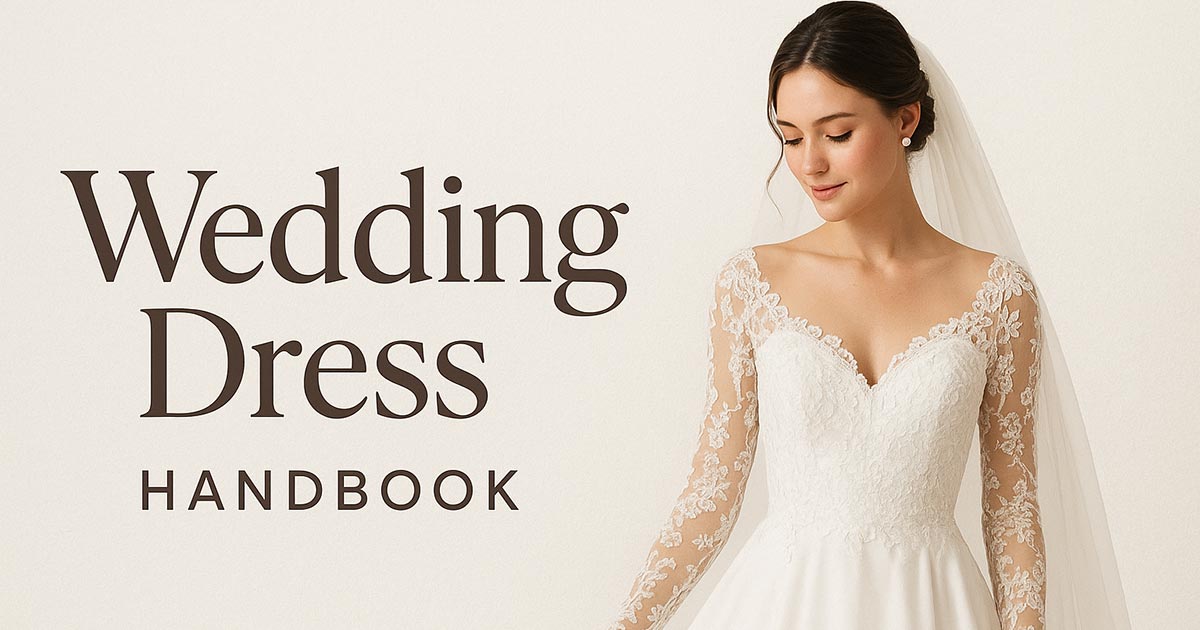
wedding dress
The bridal gown or formal dress worn by the bride.
wed in a civil ceremony
To marry in a non-religious, legally recognized ceremony.
marriage certificate
The legal document proving a marriage has taken place.
guest
A person invited to attend the wedding or reception.
marriage after divorce
A person remarries following a previous divorce.
wedding march
A ceremonial piece of music often played during processions.
mixed marriage
A marriage between partners of different nationalities or religions.
Paper wedding — 1st
First anniversary, traditionally symbolized by paper.
Tin wedding — 2nd
Second anniversary, often represented by tin.
Crystal wedding — 15th
Fifteenth anniversary, symbolized by crystal or glass.
China wedding — 20th
Twentieth anniversary, traditionally linked to china (porcelain).
Silver wedding — 25th
Twenty-fifth anniversary — the silver anniversary.
Pearl wedding — 30th
Thirtieth anniversary, commonly represented by pearls.
Ruby wedding — 40th
Fortieth anniversary, symbolized by the ruby gemstone.
Sapphire wedding — 45th
Forty-fifth anniversary, associated with sapphires.
Golden wedding — 50th
Fiftieth anniversary, commonly celebrated as the golden anniversary.
Emerald wedding — 55th
Fifty-fifth anniversary, associated with emeralds.
Diamond wedding — 60–70th
Diamond anniversaries (60th and up) marking long-lasting unions.
Western Wedding Ceremony
A Western wedding ceremony is the formal part where two people get married in front of family and friends. It usually follows a traditional pattern that most people in Europe, North America, Australia, and many other places recognize. Think of it like a beautiful play with a clear beginning, middle, and happy ending!
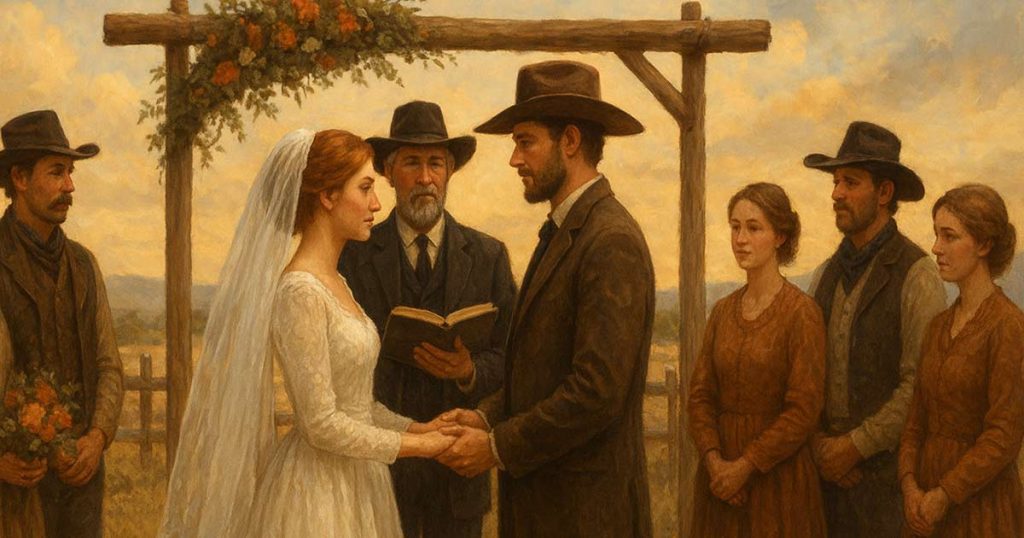
1. The Processional (Everyone walks in)
The ceremony starts with music (often piano, violin, or the classic “Here Comes the Bride”).
- First come the groom and his best man.
- Then the bridesmaids and groomsmen walk in pairs.
- Next, the flower girl (a little girl who throws petals) and ring bearer (a small boy carrying the rings).
- Finally, everyone stands up and the bride walks down the aisle with her father (or mother, or both parents, or alone — it’s her choice these days).
Example: In the movie The Sound of Music or almost every romantic comedy, you’ll see this exact moment when the doors open and the bride appears in her white dress — that’s the processional!
2. Welcome and Opening Words
An officiant (a priest, pastor, rabbi, judge, or even a close friend who got certified online) welcomes everyone and says a few words about love and marriage.
Simple example sentence you’ll hear:
“Dearly beloved, we are gathered here today to join this man and this woman in holy matrimony.”
3. Readings and Short Speech
Friends or family members often read a poem, Bible verse, or a sweet quote about love.
Popular choices:
- 1 Corinthians 13 (“Love is patient, love is kind…”), a sonnet by Shakespeare, or even lyrics from a favorite song.
4. The Vows
This is the heart of the ceremony! The couple promises to love and care for each other forever.
Two styles:
- Traditional / Repeat-after-me vows
Officiant: “Do you, John, take Sarah to be your wife…”
John repeats: “I, John, take you, Sarah, to be my wife, to have and to hold, in sickness and in health, for richer or poorer, till death do us part.” - Personal vows
Many couples today write their own.
Example:
“Sarah, you are my best friend. I promise to make you laugh when you’re sad, to bring you coffee in bed, and to always let you control the TV remote.”
5. Exchange of Rings
The best man hands over the rings.
Groom puts the ring on the bride’s finger and says:
“With this ring, I thee wed.”
Then the bride does the same.
Story: My friend Mike was so nervous he dropped the ring and it rolled under the chairs — everyone laughed, he crawled to get it, and now it’s their favorite wedding memory!
6. The Kiss!
After the officiant says:
“You may now kiss the bride!” (or the modern version: “You may kiss each other!”)
The couple kisses — usually the biggest cheer of the day.
7. Pronouncement and Recessional
Officiant: “I now pronounce you husband and wife!” (or “married!” or “partners for life!”)
The couple walks back down the aisle together as everyone claps and throws confetti or blows bubbles.
Modern Twists People Love Today
- Outdoor ceremonies in gardens, beaches, or forests.
- Brides wearing colors instead of white.
- Dogs as ring bearers.
- Unity ceremonies: lighting a candle together, pouring colored sand into one jar, or planting a tree.
In short, a Western wedding ceremony is a mix of old tradition and personal touches, all about promising forever love in front of the people who matter most. And yes — there is almost always cake afterwards!
Wedding Reception (Western Style)
A wedding reception is the big party that happens right after a Western wedding ceremony**. It’s where the newly married couple, their families, and friends eat, drink, dance, and celebrate the marriage. Think of it as the “fun part” after the serious “I do” part.
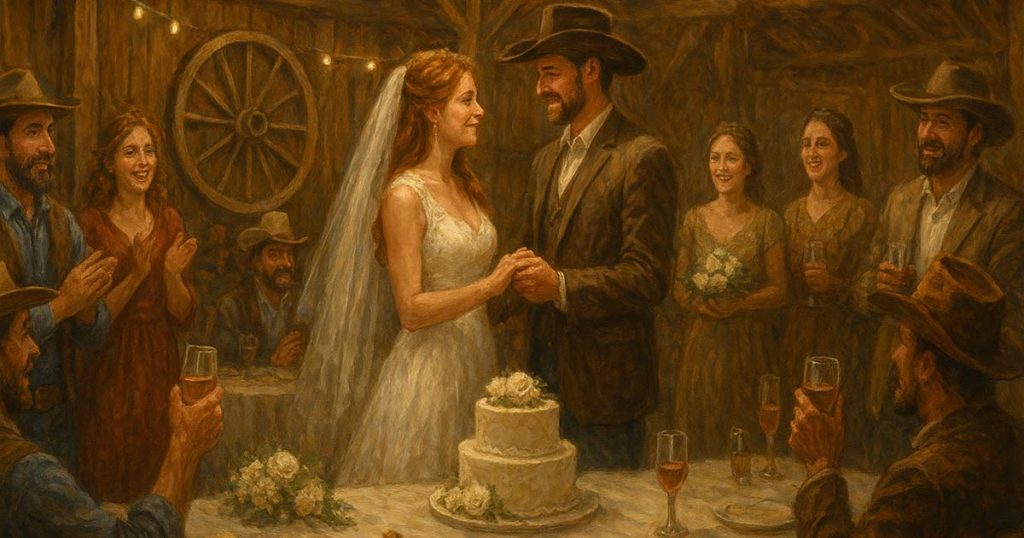
When and Where?
- Usually starts 30 minutes to 2 hours after the ceremony ends (time for photos!).
- Common places: hotel ballroom, garden, barn, beach, restaurant, or someone’s big backyard.
Typical Timeline & What Actually Happens (with examples)
- Cocktail Hour (right after ceremony)
Guests arrive and drink cocktails or soft drinks while the couple takes photos.
Example: Sarah and Mike got married in a church. While they were outside taking pictures with the photographer, everyone else stood on the lawn sipping lemonade and eating mini sliders. - Grand Entrance
The DJ or band announces the newlyweds and theatrically.
Example: “For the first time as husband and wife… Mr. and Mrs. Johnson!” Everyone cheers as the couple runs in doing a silly dance to “Sweet Caroline.” - Dinner / Food
- Sit-down plated dinner (waiters bring food), or
- Buffet style (everyone lines up), or
- Food stations (taco station, pasta station, etc.)
Example: Emma and Luis had a taco bar and a mac-and-cheese station because they met at a food truck festival.
- Toasts & Speeches
Best man, maid of honor, parents, and sometimes the couple speak. These can be funny, emotional, or both.
Example: The best man told a story about how the groom once got stuck in a kayak for 3 hours — everyone was crying with laughter. - Cake Cutting
The couple cuts the wedding cake together (often playfully smooshing a little piece in each other’s face).
Example: Traditional tiered white cake with vanilla filling, or modern trendy choices like chocolate drip cake or even a tower of donuts. - First Dance
The couple dances their first song as a married couple.
Example songs: “At Last” by Etta James, “Perfect” by Ed Sheeran, or something funny like “Sweet Home Alabama.” - Parent Dances
Bride dances with her dad, groom with his mom (sometimes combined into one song). - Open Dance Floor
DJ or live band plays everything from 80s classics to current TikTok songs.
Example: You’ll definitely hear “Shout,” “Sweet Caroline,” “Uptown Funk,” and the Cha Cha Slide. - Special Traditions (not everyone does these)
- Bouquet toss (single women try to catch the bride’s bouquet)
- Garter toss (single men catch the garter the groom removes from the bride’s leg)
- Money dance (guests pay to dance with the bride or groom — common in some cultures)
- Late-night snacks (pizza or chicken nuggets at 11 p.m. because everyone is hungry again)
- The Send-Off
At the end of the night, guests line up with sparklers, glow sticks, or blow bubbles as the couple leaves.
Example: At 11:30 p.m., everyone held sparklers outside while the couple ran to a vintage car decorated with “Just Married” signs and cans tied to the back.
In Short
A Western wedding reception is basically a personalized party that says “We got married — let’s celebrate!” Every couple makes it their own: some are fancy black-tie events, some are casual backyard BBQs with lawn games, some are wild dance parties until 2 a.m. The only real rules are food, music, and happiness.
Real-life mini story:
My friend Anna had a small 50-person reception in her parents’ garden. They rented a food truck for burgers, set up string lights, and the dance floor was just the grass. Her dad gave a tear-jerking speech, her brother DJ’d, and at midnight they served grilled cheese sandwiches. Simple, but everyone still talks about how fun it was 5 years later.
That’s a classic Western wedding reception — love, laughter, and a lot of cake!
Wedding Register Office
A register office (also called registry office or civil registry office) is the government office where couples in the UK, Ireland, Australia, Canada, New Zealand and many other countries can get legally married without a religious ceremony. It is the simplest, quickest and usually cheapest way to get married.
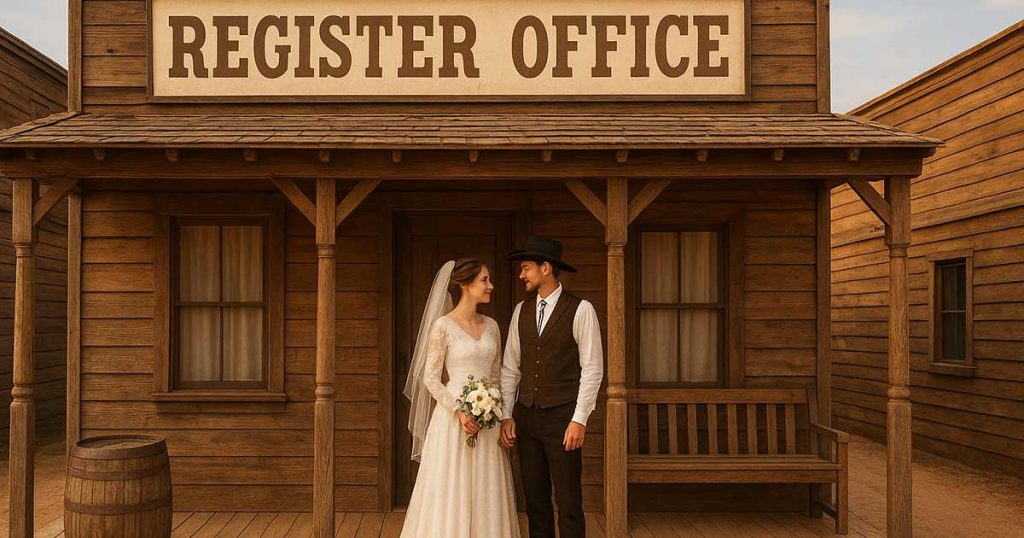
Key Features (very simple!)
- No priest, imam, rabbi → none
- church, temple, mosque → none
- Only a government official (called a registrar)
- You just sign the marriage register → you are legally husband and wife
- Takes 10–30 minutes
What actually happens? A little story
Imagine Sarah and Tom in London.
They don’t want a big church wedding. They just want to be married quickly and quietly.
- They go online and book a slot at Camden Register Office three months ahead (you must give at least 28 days’ notice in England & Wales).
- They each pay £35–£50 for the basic ceremony (prices change by city).
3 On the day, they arrive with two witnesses (their best friends Anna and Mike).
4 Everyone wears normal nice clothes — Sarah wears a simple white dress, Tom wears a suit, no big wedding gown or morning coat needed.
5 They go into a small ceremony room that looks like a nice living room with flowers.
6 The registrar says a few short legal words:
“Do you, Sarah, take Tom to be your lawful wedded husband?”
“I do.”
Same for Tom.
7 They sign the marriage register (a big book).
Witnesses sign.
Done! They are married.
7 They walk out, take photos on the steps, then go to a pub or restaurant with 20 friends for lunch. Total cost: under £500.
That’s a classic register office wedding.
Different countries, same idea:
- Australia → “Registry Office Wedding” or “BDM” (Births, Deaths & Marriages office)
- Ireland → “Civil Registration Service”
- Canada → “Civil Marriage Ceremony” at city hall
- Scotland → You can even get married in a lighthouse or on a mountain if a registrar comes!
Famous examples
- Paul McCartney and Linda Eastman → married at Marylebone Register Office, London, 1969 (huge crowds outside!)
- Lily Allen and David Harbour → quiet register office wedding in Las Vegas, 2020
- Many same-sex couples had their first legal weddings in register offices when laws changed.
Summary in one sentence
A register office wedding is the no-fuss, low-cost, completely legal way to get married — just you, your partner, two witnesses, and a government official who makes it official in 15 minutes. Perfect for couples who want to save money, avoid religion, or just keep everything simple and sweet.
Wedding Trousseau
A wedding trousseau (pronounced “troo-so”) is the collection of clothes, lingerie, jewelry, bed linens, towels, and personal items that a bride prepares (or receives as gifts) before her wedding to start her new married life. In simple words: everything a bride packs to take to her husband’s home.
The word comes from the old French word “trousse” meaning “bundle” — because in the old days, all these things were literally tied up in a bundle or packed in a special wooden chest called a “trousseau chest”.
A little story to make it clear
In 1950s England, a girl named Mary was getting married. Starting from the day she got engaged, her mother, aunts, and grandmothers began helping her build her trousseau. Every Sunday after church they would:
- Embroider bedsheets with Mary’s new married initials “M & J”
- Knit lace edges for pillowcases
- Buy pretty nightgowns and silk stockings
- Sew a special “going-away” dress for the end of the wedding reception
- Collect silver cutlery, crystal glasses, and tablecloths as wedding gifts
Six months later, everything was beautifully folded and packed into a big cedar chest. On her wedding day, after the party, Mary and her new husband John drove away in their little car, and the trousseau chest was loaded in the back. When they arrived at their new flat, Mary opened the chest and suddenly their empty home felt like a real home — because she had brought everything she needed to begin married life.
That is the classic idea of a Western wedding trousseau.
What was usually inside a traditional trousseau? (Examples from 19th–mid 20th century Europe & America)
- Lingerie & nightwear: 12 pairs of panties, 6 bras, 6 nightgowns, silk slips, a peignoir set (pretty robe + nightgown)
- Day clothes: “going-away” outfit, several day dresses, coats, gloves, handbags
- Household linens: 12–24 embroidered sheets, pillowcases, tablecloths, tea towels, bath towels — often monogrammed
- Personal jewelry: pearl earrings, a gold watch, maybe a simple diamond pendant from the groom
- Shoes: wedding shoes, everyday shoes, bedroom slippers
- Sometimes even china, silverware, or small kitchen items if the couple was setting up a new house
The trousseau today
The big cedar chest has mostly disappeared, but the idea lives on in a modern way:
- Many brides still make a “bridal lingerie set” for the wedding night and honeymoon (very popular now — think brands like Victoria’s Secret or Agent Provocateur).
- Some mothers still give “hope chest” gifts: a set of luxury bed sheets (e.g., Frette or Yves Delorme), monogrammed towels, or a beautiful robe.
- In the USA, the bridal shower has partly replaced the old trousseau — friends give the bride all the things she will need in her new home.
Famous real-life examples
- Princess Diana (1981): Her trousseau included 100+ outfits, dozens of shoes, and mountains of lingerie — it took months to prepare.
- Grace Kelly (1956): When she married the Prince of Monaco, her Hollywood studio and family gave her a trousseau full of designer clothes, furs, and lace lingerie that filled several ship trunks.
- Queen Elizabeth II (1947): Her trousseau had clothes for every occasion, plus linens embroidered with the royal cipher. Because of post-war rationing, British girls sent her their clothing coupons so she could have enough fabric!
In one sentence summary
A wedding trousseau is like a “starter pack for married life” that the bride collects before the big day. In the past it was huge and very formal; today it is usually smaller and more personal — but the sweet idea is the same: a girl gathers beautiful things to begin her new chapter as a wife.
Usher (Western Wedding)
What is an “Usher” in a Western wedding?
An usher is a man (usually a good friend or relative of the groom) who helps guests find their seats and keeps everything running smoothly before the ceremony starts. Think of him as a friendly guide + traffic controller at the wedding.
He is NOT the same as the “Best Man” (the groom’s No.1 friend) or “Groomsmen” (the groom’s main crew who stand next to him). Ushers are like the “junior helpers” of the groomsmen.
Main jobs of an usher
- Greet guests at the entrance
- Hand out programs (the little booklets about the ceremony)
- Ask “Are you with the bride or the groom?” and seat people on the correct side
- Seat special guests (grandparents, VIPs) with extra care
- Make sure aisles stay clear and everything looks neat
- Sometimes light candles or roll out the aisle runner
Classic example everyone knows
In almost every American romantic comedy movie wedding scene, you see young men in matching suits standing at the church door saying:
“Bride’s side or groom’s side?”
Those guys are ushers!
A funny real-life story
At my friend Mike and Sarah’s wedding in 2023:
Mike had four groomsmen and three ushers (his cousins). One usher, 19-year-old Jake, was super nervous. When the bride’s 90-year-old grandma arrived with a walker, Jake panicked and tried to seat her in the very front row… but accidentally put her on the groom’s side! Grandma looked around, saw only Mike’s rugby teammates, and loudly said, “I don’t know any of these giant boys!” Everyone laughed, Jake turned bright red, and he quickly moved her to the correct side with the bride’s family. Now the whole family still teases Jake as “the usher who almost started a family war”.
How to be a great usher – simple tips
- Smile a lot – you’re the first face guests see
- Wear the same suit/tuxedo as the groomsmen (but usually no flower on the lapel)
- Walk slowly when escorting ladies (offer your arm to mothers and grandmothers)
- Left arm for guests: tradition says you offer your right arm so the lady walks on your left
- Stay calm even if guests are late or kids are running wild
Quick comparison
- Best Man → gives speech, holds rings, looks after groom
- Groomsmen → stand at the altar, party with groom
- Ushers → seat guests, help everyone feel welcome
In short, ushers are the unsung heroes who make sure the wedding starts smoothly and everyone feels taken care of before the bride walks down the aisle!
Wedding Vows (Western Style)
What are wedding vows?
Wedding vows are the most important words spoken during a Western wedding ceremony. They are the promises that the bride and groom make to each other in front of family, friends, and (often) God. These promises explain how they will love and treat each other for the rest of their lives.
Two main types
- Traditional / Religious vows – Usually short, very old (sometimes hundreds of years old), and used in church weddings.
- Personal / Modern vows – Written by the couple themselves. Longer, more emotional, and often include private jokes or stories.
1. Traditional vows (the classic ones you hear in movies)
Most come from the Christian “Book of Common Prayer” (written in 1549 and still used today).
Classic example (said by the groom, then repeated by the bride):
“I, [Name], take you, [Name], to be my lawfully wedded wife,
to have and to hold,
from this day forward,
for better, for worse,
for richer, for poorer,
in sickness and in health,
to love and to cherish,
till death us do part.”
Short explanation of the famous lines:
- “for better, for worse → even when life is hard
- for richer, for poorer → even if we become poor
- in sickness and in health → even if one of us is very ill
- till death us do part → only death can end this promise
2. Personal vows (modern & heartfelt)
Today many couples write their own. They usually keep the big promises but add their own personality and stories.
Real-life example (from a wedding in 2023): Groom → Bride:
“Sarah, ten years ago I spilled coffee on you at that tiny café in Paris and you laughed instead of getting mad—that was the moment I knew.
I promise to keep making you laugh every single day.
I promise to be your co-pilot on every road trip, your sous-chef when the recipe goes wrong, and the one who always saves you the last bite of dessert.
I promise to love you on the easy days and carry you through the hard ones, today and every day after.”
Bride → Groom:
“Mike, you once drove six hours in a snowstorm just to bring me soup when I was sick. That’s the kind of man you are.
I vow to be your safe place when the world feels too loud.
I vow to cheer louder than anyone at your soccer games—even when your team is losing 5-0.
I promise to choose you every morning, even when we’re old and grumpy and fighting over the TV remote.”
A little story to remember the difference
Imagine Jack and Lily getting married on a beach at sunset.
The priest says: “Now you may say your own vows.”
Jack starts crying almost immediately:
“Lily, when we met, I was terrified of dogs. You had three huge ones. You said, ‘Don’t worry, they’ll grow on you.’
Well, both the dogs and you grew on me—actually, you grew IN me. You became my home.
I promise to walk those three crazy dogs every morning, to make you pancakes in silly shapes, and to love you even when you steal all the blankets. Forever.”
Lily laughs through happy tears and answers:
“Jack, you learned my coffee order before you learned my last name. That pretty much sums you up—always putting me first.
I promise to keep stealing the blankets (but I’ll share them when you say please).
I promise to dance with you in the kitchen, to listen when you need to talk at 3 a.m., and to love you until we’re 100 years old and still holding hands.”
Everyone on the beach cried—even the dogs barked at the right moment!
Summary
Whether short and ancient (“in sickness and in health”) or long and personal (“I’ll save you the last bite of dessert”), Western wedding vows all say the same big thing in different words:
“I choose you, I will keep choosing you, and I will love you no matter what—until the very end.”
Wedding Day (Western Style)
A wedding day is the special day when two people get married in a Western-style (mostly European and North-American) tradition. It is usually full of love, flowers, beautiful clothes, happy tears, good food, and a big party. Let’s look at a typical modern Western wedding day step by step, with a little story to make it easier to understand.
The Story of Emma and Jack’s Wedding Day
Emma and Jack have been together for five years. Today, Saturday, June 15, they are finally getting married!
Morning – Getting Ready
- Emma wakes up early in a hotel with her bridesmaids (best female friends). They drink champagne, laugh, and help Emma put on her white wedding dress (most Western brides still choose white because Queen Victoria wore white in 1840 and started the fashion).
- Jack is in another room with his groomsmen. He puts on a black tuxedo or a smart suit and a tie or bow tie that matches the wedding colors (today it’s navy blue).
The Ceremony (usually 11 am – 3 pm)
Most Western weddings have two possible places for the “I do” part:
- A church (religious wedding)
- A garden, beach, castle, or hotel (civil/secular wedding)
Emma and Jack chose a small old church.
- Guests arrive and sit on two sides: left for the bride’s family and friends, right for the groom’s.
- Jack stands at the front with the officiant (priest or celebrant) and waits nervously.
- Music starts (very often “Here Comes the Bride” or Canon in D). Everyone stands up and turns around.
- First come the bridesmaids in matching dresses, then the flower girl (a little girl throwing petals), and finally Emma walks slowly down the aisle with her father. Jack starts crying when he sees her.
- The officiant asks: “Who gives this woman to be married?” Emma’s dad says “I do” and sits down.
- They say vows (promises). Some people write their own:
“Emma, you are my best friend. I promise to love you in good days and bad days, forever.” - They exchange rings: “With this ring, I thee wed.”
- The big moment: “You may now kiss the bride!” Everyone claps and cheers.
Photos (right after the ceremony)
The couple and families take hundreds of pictures outside the church: kissing, laughing, and throwing confetti or blowing bubbles.
The Reception (the party!)
Everyone drives to a beautiful venue (barn, hotel ballroom, garden tent, etc.).
Typical order:
- Cocktail hour – drinks and small snacks while the couple takes more photos.
- Grand entrance – the DJ or band announces: “For the first time as husband and wife… Mr. and Mrs. Jack & Emma!” They walk in while everyone cheers.
- Dinner – usually a three-course meal (salad, main course like chicken or salmon, wedding cake for dessert).
- Speeches – Best man, maid of honor, and fathers tell funny and emotional stories. Lots of tears and laughter.
- Cake cutting – the couple cuts a big, beautiful (often white) cake together and feeds each other the first bite (sometimes they playfully smash it in each other’s face!).
- First dance – Emma and Jack dance alone to “their song” (maybe “Perfect” by Ed Sheeran). Then everyone joins.
- Party time – dancing, photo booth, sometimes fireworks or a sparkler exit at midnight.
End of the Night
The couple leaves under a tunnel of sparklers or in a classic car with a “Just Married” sign and cans tied to the back.
Fun Little Traditions & Examples
- Something old, something new, something borrowed, something blue – Emma wore her grandmother’s earrings (old), new dress, borrowed veil from her sister, and a blue garter.
- Throwing the bouquet – all single women stand behind Emma. She throws her flowers; whoever catches it is “next to marry.”
- Garter toss – Jack removes a lacy garter from Emma’s leg (with his teeth – funny moment!) and throws it to single men.
In short, a Western wedding day is one big love celebration that mixes old traditions with the couple’s own personality. Every wedding is different, but the main feeling is always the same: joy, love, and “happily ever after” beginning!
Wedding Anniversary
A wedding anniversary is the date when a couple got married, celebrated every year afterward. In Western countries (especially the US, UK, Canada, Australia), people often follow a traditional list of “anniversary gifts” that suggest what to give for each year. The further the year, the more precious the material — it symbolizes how the marriage gets stronger over time.
Here is the most common modern Western list with simple explanations and examples:
| Year | Name | Traditional Gift (UK/US) | Modern Gift | Simple Meaning & Example |
|---|---|---|---|---|
| 1 | Paper | Paper | Clock | Marriage is still fragile like paper. Example: Give concert tickets, a love letter, or a photo album. |
| 5 | Wood | Wood | Silverware | Marriage now has strong roots like a tree. Example: A wooden picture frame or a weekend in a forest cabin. |
| 10 | Tin / Aluminium | Tin | Diamond jewelry | Flexible but durable. Example: Custom tin box with memories inside, or a diamond necklace. |
| 15 | Crystal | Crystal | Watch | Clear and beautiful. Example: Crystal wine glasses for romantic dinners. |
| 20 | China | Porcelain | Platinum | Delicate but lasts if cared for. Example: A beautiful tea set. |
| 25 | Silver | Silver | Silver | First “big” milestone! Example: Silver rings, a second honeymoon, big party with family. |
| 30 | Pearl | Pearl | Diamond | Something rare and precious grown over time. Example: Pearl earrings. |
| 40 | Ruby | Ruby | Ruby | Passion still burning red. Example: Ruby ring or a trip to somewhere “hot”. |
| 50 | Gold | Gold | Gold | Half a century together — huge celebration! Example: Renew vows wearing gold, give golden jewelry. |
| 60 | Diamond | Diamond | Diamond | Unbreakable love. Example: Queens Elizabeth II and Prince Philip celebrated their 60th with diamonds and national parties. |
Real-life stories
- 1st anniversary (Paper)
Sarah and Mike got married in 2023. For their first anniversary they had almost no money. Mike wrote Sarah a 10-page love letter on beautiful paper and hid paper notes with memories all around their tiny apartment. Sarah cried happily — best paper gift ever! - 25th anniversary (Silver)
My grandparents celebrated 25 years in 2019. All children and grandchildren surprised them with new silver wedding rings and organized a “second wedding” in the same church. Grandma said it felt like falling in love again. - 50th anniversary (Gold)
In 2022, a couple in Texas reached 50 years. Their small town threw a parade, the local jeweler gave them golden rings for free, and the mayor renewed their vows on the town square. The couple said: “Gold is perfect — our love really turned into gold.”
Bonus: What if you forget the “official” gift?
No problem! The list is only a fun tradition. Most couples today mix traditional and modern gifts, or simply do something meaningful:
- A surprise weekend trip
- Renewing vows on a beach
- Planting a tree together
- Making a video with messages from all friends and family
The most important thing is to say “I still choose you” every year — the gift is just the wrapping paper for that message.
Happy anniversary to everyone celebrating today! 🎉
Bride (Western Style)
A bride is the woman who is getting married or has just gotten married on her wedding day. In Western culture (mainly Europe, North America, Australia, etc.), the word “bride” almost always makes people picture a woman in a beautiful white dress, wearing a veil, holding flowers, and looking very happy. Here is a simple introduction with lots of examples and little stories.
1. The Classic Look
Most Western brides wear a long white wedding dress and a veil.
- Why white? It became popular after Queen Victoria wore a white dress to marry Prince Albert in 1840. Before that, brides just wore their best dress (any color). Now white means “pure and new beginning.”
- Example: In almost every Hollywood wedding movie (like in The Princess Diaries 2 or Mamma Mia!), the bride walks in wearing a big white dress.
2. Important Things a Bride Usually Has
- Something old, something new, something borrowed, something blue
This is a very old English rhyme for good luck.
Example: Sarah wore her grandmother’s necklace (old), a brand-new dress (new), her best friend’s earrings (borrowed), and a tiny blue ribbon sewn inside the dress (blue). - Bouquet of flowers
The bride holds it while walking down the aisle and usually throws it at the end. Tradition says the woman who catches it will be the next to marry! - Veil or headpiece
Some brides wear a long veil, some wear a flower crown, some wear nothing on the head.
3. Typical Wedding Day Moments for the Bride
- Getting ready with bridesmaids (best female friends) – taking photos, laughing, drinking champagne.
- “First look” – the groom sees the bride for the first time (some couples do this privately before the ceremony, some wait until she walks down the aisle).
- Walking down the aisle, usually with her father or a family member.
- Saying “I do” and kissing the groom.
- The big party (reception) – first dance, cutting the cake, throwing the bouquet.
4. Real Little Stories
- Story 1: My friend Emily was so nervous that when she walked down the aisle, she stepped on her own dress and almost fell. Everyone laughed (including her), and now it’s the funniest memory of her wedding.
- Story 2: Meghan Markle (now Duchess of Sussex) married Prince Harry in 2018. She wore a simple but super-elegant white dress designed by Givenchy and a 5-meter-long veil. Millions of people watched her become a real-life modern bride.
- Story 3: Some brides today choose colored dresses! Singer Gwen Stefani wore a pink ombre dress when she married Blake Shelton in 2021. So “bride” doesn’t always mean white anymore.
5. Modern Changes
Today many Western brides mix traditions with their own style:
- Wearing black, red, or even jumpsuits instead of white dresses.
- Having “bridesmen” (male friends) instead of only bridesmaids.
- Getting married on beaches, in forests, or city rooftops instead of churches.
In short, a Western bride is the star of the wedding day. She can be traditional (white dress, church, big party) or completely unique, but she is always the woman who is saying “yes” to spending her life with someone she loves.
Groom (Western Wedding)
What is a “groom” in a Western wedding?
The groom is the man who is getting married. He is the husband-to-be, standing next to the bride (the woman getting married). In simple words:
Bride = wife-to-be
Groom = husband-to-be
Together, the bride and groom are the “newlyweds” after the wedding.
What does the groom usually wear?
In traditional Western weddings, the groom wears a formal suit or tuxedo (燕尾服).
Common styles:
- Black tuxedo + bow tie (most classic)
- Dark grey or navy suit
- In summer or beach weddings: light-colored suits (beige, light grey)
Example:
Prince William (UK royal wedding 2011) wore a bright red military uniform because he is an officer.
Prince Harry wore a black tuxedo with tails.
Ordinary people usually choose black or dark suits.
What does the groom do on the wedding day?
A simple timeline with stories:
- Morning – Getting ready
The groom and his groomsmen (best man + other male friends) put on suits together, take photos, and sometimes drink a little champagne.
Real story: My friend Mike was so nervous that he put his trousers on backwards. His best man noticed only 10 minutes before leaving for the church! - Ceremony
The groom waits at the front of the church/venue. When music starts, the bride walks down the aisle. The groom usually sees his bride for the first time that day (“first look” at the altar”).
Many grooms cry at this moment.
Example: In the movie The Hangover, the groom Doug is calm… until the wolf pack loses him in Las Vegas the night before! - Vows and ring exchange
Groom says: “I, David, take you, Sarah, to be my wife…”
He puts the wedding ring on her finger (usually the left ring finger in Western countries). - Kiss the bride!
The officiant says: “You may now kiss the bride.”
This is often the loudest cheer of the day. - Reception (party after ceremony)
- Groom gives a speech to thank everyone (especially parents and bride).
- First dance with the bride (usually a slow song).
- Cutting the cake together.
- Sometimes the groom throws the garter (a band the bride wears on her leg) to the single men – similar to the bride throwing the bouquet.
Funny traditions about the groom
- The groom is NOT supposed to see the bride in her dress before the ceremony (bad luck!). Many couples now do a “first look” photo shoot privately before the ceremony.
- Bachelor party (stag night): The groom’s last big party as a single man, usually organized by the best man, sometimes 1–2 weeks before the wedding (think Las Vegas stories…).
Quick examples from real life & movies
- Romantic: Ryan Reynolds waited at the altar, cried when Blake Lively walked in (2012).
- Funny: In Friends, Ross says the wrong name (“I take thee, Rachel”) at the altar in London.
- Royal: Prince William looked very nervous but smiled the whole day in 2011.
In short: The groom is half of the couple, usually dressed sharply, gets emotional when he sees his bride, gives a speech, dances, and starts married life with a big kiss and a lot of cake!
Officiant (West-style)
What is an officiant?
An officiant is the person who “officiates” (officially performs and leads) a wedding ceremony in Western countries. In simple words, they are the one who stands in front of the couple and says “Do you take this person…?” and later “I now pronounce you husband and wife!”
They make the marriage legally valid and usually also make the ceremony feel special and personal.
Types of Western officiants (with examples)
- Religious officiant (most traditional)
- Priest, pastor, rabbi, imam, etc.
- Ceremony usually happens in a church, synagogue, mosque, or temple.
- Example: Emily and Jack got married in a small Catholic church. Father Michael, their family priest for 20 years, was the officiant. He read Bible verses, asked them to say traditional vows, and ended with “You may kiss the bride.”
- Civil officiant / Government officiant
- Judge, mayor, justice of the peace, or city hall registrar.
- Very quick and legal-focused, often no religion.
- Example: Sophie and Liam wanted the simplest wedding ever. They went to city hall on a Tuesday morning. A judge in a normal clothes married them in 5 minutes in a small office. Cost: $35.
- Professional celebrant / Independent officiant
- A person trained and licensed just to do weddings (very popular now).
- They can do religious, spiritual, funny, or totally unique ceremonies.
- Example: Mia and Alex love Star Wars. They hired Sarah, a professional celebrant they found online. Sarah wore normal clothes, wrote a ceremony that included quotes from Yoda, let them write their own vows, and even had a lightsaber arch at the end. It was 100% legal and felt completely “like them.”
- Friend or family member as officiant (“ordained for a day”)
- In many U.S. states and some countries, anyone can get ordained online in 2 minutes for free (e.g., Universal Life Church, American Marriage Ministries).
- Super common now!
- Example: When Lisa and Tom got married on a beach in California, Lisa’s brother Ryan got ordained online the night before. He told funny stories about them growing up, made everyone laugh and cry, and signed the marriage license at the end. Total cost for Ryan’s “ordination”: $0.
A little story to show the difference
Imagine three sisters getting married the same year:
- Sister 1: Traditional church wedding → priest officiant, white dress, 200 guests, organ music.
- Sister 2: City hall at lunchtime → judge officiant, jeans and sneakers, just the couple + two witnesses, then pizza.
- Sister 3: Backyard party → best friend (ordained online last week) as officiant, Harry Potter theme, everyone in costumes, dancing started right after the “I do.”
All three weddings were 100% legally married, but felt completely different because of who the officiated and how.
Summary in one sentence
A Western officiant is simply the person with the legal power to marry you — they can be a priest, a judge, a professional, or even your best friend who clicked “become ordained” online five minutes ago!
Wedding Pastor
A wedding pastor (also called wedding officiant or wedding minister) is the person who legally and officially marries a couple in a Western-style wedding. In most English-speaking countries, the pastor stands in front of the bride, groom, and guests, leads the ceremony, asks for the vows, and finally says the famous words:
“You may now kiss the bride!”
and
“I now pronounce you husband and wife.”
Who can be a wedding pastor?
- A real church pastor or priest (most traditional)
- A licensed civil celebrant (government-approved, but not religious)
- In many places, even your friend or family member can get temporarily licensed online to marry you (very popular in the USA!)
What does a wedding pastor actually do? (with examples)
- Welcome everyone & set the mood
Example:
“Dearly beloved, we are gathered here today in the sight of God and these witnesses to join Sarah and Michael in holy matrimony…” - Give a short talk (called a “homily” or “message”)
The pastor usually tells a 3–5 minute story about love.
Real-life example a pastor used:
“When I met Sarah and Michael, they told me how they got stuck in an elevator together for 40 minutes on their second date. Instead of panicking, they started telling each other their biggest dreams. That’s when they knew this was something special. Love isn’t always roses and sunshine — sometimes it starts in a broken elevator!” - The “Giving Away” (optional, but classic)
Pastor: “Who gives this woman to be married to this man?”
Father of the bride: “Her mother and I do.” (or “I do”) - The Vows
Option A – Traditional (repeat-after-me)
Pastor: “Michael, repeat after me: I, Michael, take you, Sarah…”
Option B – Personal vows (the couple writes their own)
Example from a real wedding:
Groom: “Sarah, you are my best friend and my greatest adventure. I promise to keep choosing you every day, even when you steal all the blankets.” - Ring Exchange
Pastor usually says something like:
“These rings are a circle with no beginning and no end — just like your love.”
Then: “Michael, place the ring on Sarah’s finger and repeat: With this ring, I thee wed.” - Pronouncement & First Kiss
Pastor (with a big smile):
“By the power vested in me by God and the state of California, I now pronounce you husband and wife! You may kiss the bride!”
(Everyone cheers and claps!) - Signing the marriage license (usually right after, in a side room)
The pastor + two witnesses sign the official paper so the marriage is legal.
Funny real story
At one wedding, the pastor was very old-school and dramatic. When he said “You may now kiss the bride,” the groom got so excited he dipped the bride like in the movies and they both fell over! The pastor just looked at the guests and said, “Well… that’s one way to start a marriage!” Everyone laughed for five minutes.
In short, the wedding pastor is part storyteller, part legal official, and part cheerleader for love — all rolled into one person wearing a robe (or sometimes just a nice suit)!
Groomsman
A groomsman (also called usher or bridesman)** is one of the male friends or relatives who stands next to the groom during a Western-style wedding. Think of them as the groom’s personal “support team” on the big day.
What do groomsmen actually do?
- Before the wedding
- Help the groom pick suits/tuxedos
- Organize the bachelor party (stag night)
- Attend the rehearsal dinner
- On the wedding day
- Wear matching or coordinated suits
- Welcome guests and show them to their seats (that’s why they’re sometimes called “ushers”)
- Stand beside the groom at the altar in a line
- Hold the wedding rings if the best man isn’t doing it
- Walk down the aisle with a bridesmaid during the processional and recessional
- Give a speech/toast at the reception (usually funny stories about the groom)
3.。。but not TOO embarrassing)
- The Best Man is the “head groomsman”
- He is usually the groom’s brother or closest friend
- Extra duties: keep the rings safe, give the main speech, make sure the groom actually gets to the church on time!
Real-life examples & mini stories
Example 1 – The Classic Line-up
At Prince William and Kate’s royal wedding in 2011, Prince Harry was the best man. He stood right next to his brother William, wearing a fancy military uniform, and later gave a very funny (and slightly cheeky) best-man speech at the reception.
Example 2 – The “Save-the-Day” Groomsman
Mike’s wedding was almost ruined when it started pouring rain. His four groomsmen quickly grabbed every umbrella from the cars, held them over the bride and guests, and turned a disaster into a sweet photos of everyone laughing under colorful umbrellas.
Example 3 – The Funny Speech
At Sarah and Tom’s wedding, the best man (Tom’s childhood friend Jake) told the story of how 12-year-old Tom once got stuck in a tree trying to “rescue” a kite and had to be saved by the fire department. Everyone roared with laughter, and Tom just hid his face in his hands while Sarah kissed his cheek. Perfect groomsman moment!
How many groomsmen are normal?
- Small wedding: 1–3 groomsmen
- Average wedding: 4–6 groomsmen
- Big or royal weddings: sometimes 8–10 or more!
In short, groomsmen are the groom’s crew — they make him look good, keep things fun, and help everything run smoothly so the couple can enjoy their day. They’re basically the male version of bridesmaids!
Bridesmaid
A bridesmaid is a close female friend or relative of the bride who helps and supports her before and during a Western-style wedding. In simple words, she is the bride’s “best teammate” on the big day.
Main jobs of a bridesmaid
- Help the bride choose the wedding dress and accessories
- Plan and pay for the bachelorette party (girls’ night out before the wedding)
- Help with wedding planning (sending invitations, decorating, etc.)
- Wear a matching dress on the wedding day (usually chosen by the bride)
- Walk down the aisle before the bride
- Stand next to the bride during the ceremony
- Help fix the bride’s dress and veil, hold the bouquet when needed
- Give a short speech or toast at the reception
- Make sure the bride is happy and calm all day
Different roles
- Maid of Honour (or Matron of Honour if she is married): the “head bridesmaid”, the bride’s best friend or sister, has the most duties
- Bridesmaids: usually 2–8 girls, all wearing similar dresses
- Junior bridesmaid: a younger girl (usually 9–16 years old)
- Flower girl: a very little girl (3–8 years old) who throws flower petals
Real-life examples & mini stories
- Classic American wedding
Sarah was getting married. She asked her sister Emily to be Maid of Honour and her three college friends to be bridesmaids. All four bridesmaids wore the same lavender dresses. Two weeks before the wedding, they threw Sarah a fun bachelorette weekend in Las Vegas — dancing, cocktails, and funny games. On the wedding day, when Sarah started crying because it rained, Emily ran to buy 20 big umbrellas so everyone stayed dry and the photos still looked beautiful. - British wedding example
Kate (not the princess!) chose six bridesmaids, including her 10-year-old niece as junior bridesmaid. The bridesmaids wore pale mint-green dresses. During the reception, the Maid of Honour gave a very funny speech telling the story of how Kate once got stuck in a wedding dress in a shop changing room in 2018 — everyone laughed until they cried. - Modern small wedding (2024 trend)
Lisa only wanted one bridesmaid — her best friend Mia — because she wanted to keep things simple. They picked matching sage-green pyjamas for the “getting ready” photos in the morning, then Mia changed into a normal elegant dress for the ceremony. Mia’s only big job that day: when Lisa’s veil got caught in a tree during outdoor photos, Mia climbed (in heels!) to rescue it.
Fun facts
- The tradition started long ago because people believed evil spirits wanted to harm the bride, so bridesmaids wore similar dresses to “to confuse the spirits”.
- Today the dresses are still similar, but now it’s mostly for beautiful photos!
- Bridesmaids usually pay for their own dress (it can be expensive — sometimes $200–$400), so good friends only say “yes” if they really love the bride.
In short, being a bridesmaid means: “I love you so much that I will wear whatever dress you choose, spend money, and run around all day just to make your wedding perfect.” And most girls feel honoured to do it!
Honeymoon
A honeymoon is the sweet vacation a newly married couple takes right after their wedding. It is a special trip just for the bride and groom to relax, celebrate their love, and enjoy being husband and wife for the first time without parents, friends, or work getting in the way.
Why do people go on a honeymoon?
- To rest after the busy and sometimes stressful wedding
- To spend romantic time alone together
- To make beautiful memories at the start of married life
- In the past, it also helped the couple get to know each other better (many old weddings were arranged, so the bride and groom barely knew each other!)
Where did the word “honeymoon” come from?
The word appeared around the 1500s. One old story says it comes from an ancient custom: newlyweds drank mead (a sweet wine made from honey) every day for one full moon (about 30 days) after the wedding to bring good luck and fertility. “Honey” + “moon” = honeymoon!
Classic Western honeymoon styles with real-life examples
- Beach & Sunshine Honeymoon (the most popular today)
Example: After their wedding in New York, Emily and Jack flew to Maui, Hawaii. They stayed in a small hotel right on the beach, woke up to the ocean view every morning, went snorkeling with sea turtles, had candle-light dinners on the sand, and just relaxed in the sun. Very romantic and relaxing! - European City & Culture Honeymoon
Example: Sophie and Liam from London got married and then spent two weeks in Italy. They started in Rome (Colosseum and eating real pizza), went to Florence (art and gelato), took a gondola ride in Venice, and finished on the beautiful Amalfi Coast. Perfect for couples who love history, food, and pretty photos. - Adventure Honeymoon
Example: Sarah and Mike love outdoor sports, so they chose New Zealand. They went hiking on glaciers, bungee jumping, kayaking in Milford Sound, and even saw glow-worm caves at night. Not just relaxing — exciting and unforgettable! - Tropical Island “Overwater Bungalow” Honeymoon
Example: When Kim and Alex got married in California, they saved money for the Maldives. They stayed in a little house built on stilts over clear blue water. They could jump straight from their room into the ocean, have breakfast delivered by boat, and watch baby sharks swim under their floor. Super luxurious and private. - Winter & Snow Honeymoon
Example: Anna and Erik from Canada wanted something different, so they went to Lapland, Finland. They stayed in a glass igloo, watched the Northern Lights dance in the sky while lying in bed, rode husky sleds, and warmed up in saunas. Magical for couples who love snow and cozy moments.
How long is a honeymoon?
Most Western couples take 7–14 days. Some only go for a long weekend (“mini-moon”) if they can’t take much time off work, and later do a bigger trip. Rich or celebrity couples sometimes go for a whole month!
A little story to finish
After their big church wedding in Texas, Maria and Tom were exhausted from greeting 300 guests. The next morning they flew to a tiny island in Belize with only 20 bungalows. No TV, no Wi-Fi, just white sand and each other. They laughed that the first three days they only left the room to eat and snorkel. When they came home, all their friends said they were “glowing” — that’s the real magic of a honeymoon!
In short, a Western-style honeymoon is the first big adventure of married life, full of love, rest, and happy memories. Every couple chooses the style that fits them best — beach, city, mountain, or island — the important thing is to celebrate becoming a family of two! ♡
Wedding Dress (Western Style)
A wedding dress (also called a bridal gown) is the special dress that a bride wears on her wedding day in Western cultures. It is usually the most important and beautiful outfit a woman will ever wear, and it often carries dreams, traditions, and personal stories.
The Most Famous Color: White
Today, almost everyone thinks “wedding dress = white”.
But this tradition is quite new!
- Before 1840, brides simply wore their best dress, which could be red, blue, black, or any color.
- In 1840, Queen Victoria of England married Prince Albert wearing a pure white dress. Newspapers wrote about it, photos spread, and suddenly white became fashionable.
- After that, white started to mean “purity” and “new beginning”. Now about 80–90% of Western brides choose white or off-white (ivory, champagne, etc.).
Real-life example:
When American actress Grace Kelly married Prince Rainier of Monaco in 1956, she wore an elegant white lace dress designed by MGM studio. Millions saw the photos and copied the style — this dress is still called one of the most beautiful wedding dresses in history.
Main Styles of Modern Wedding Dresses
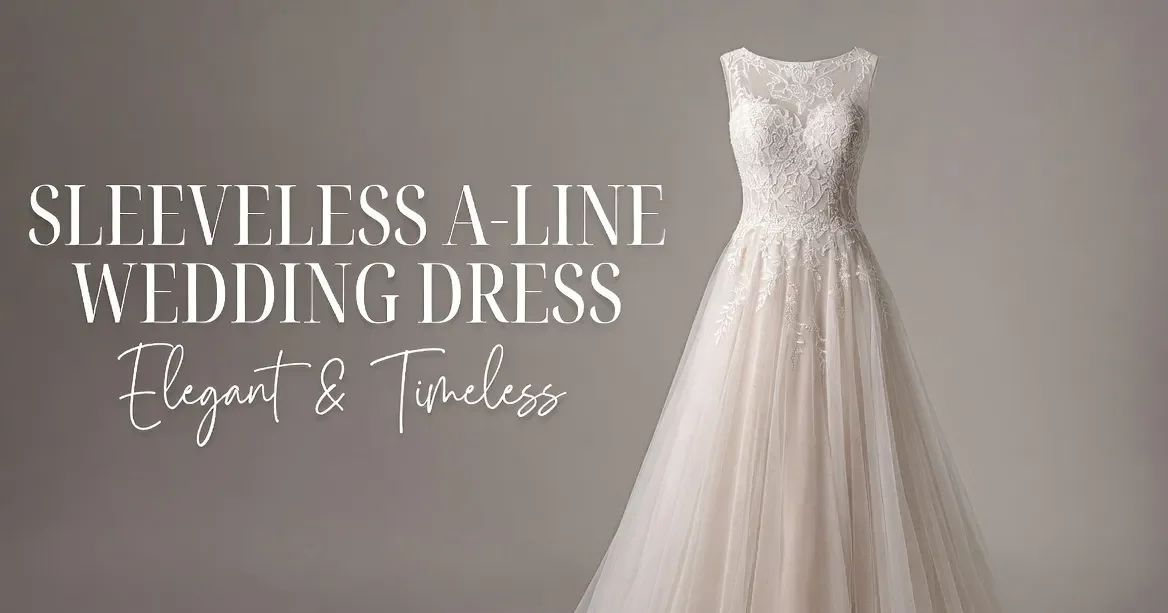
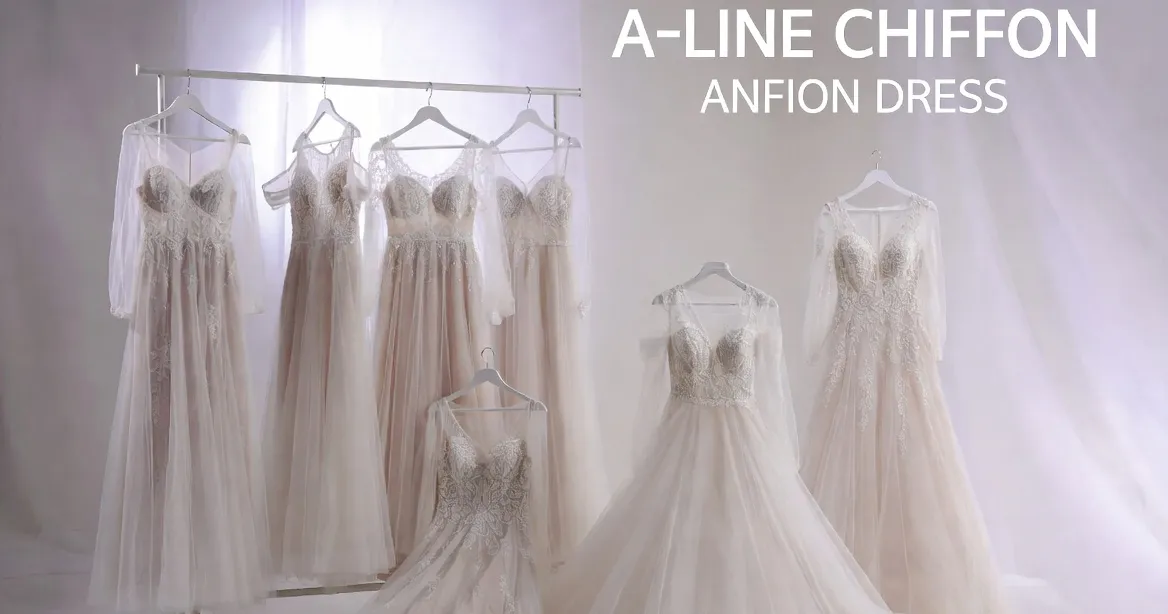
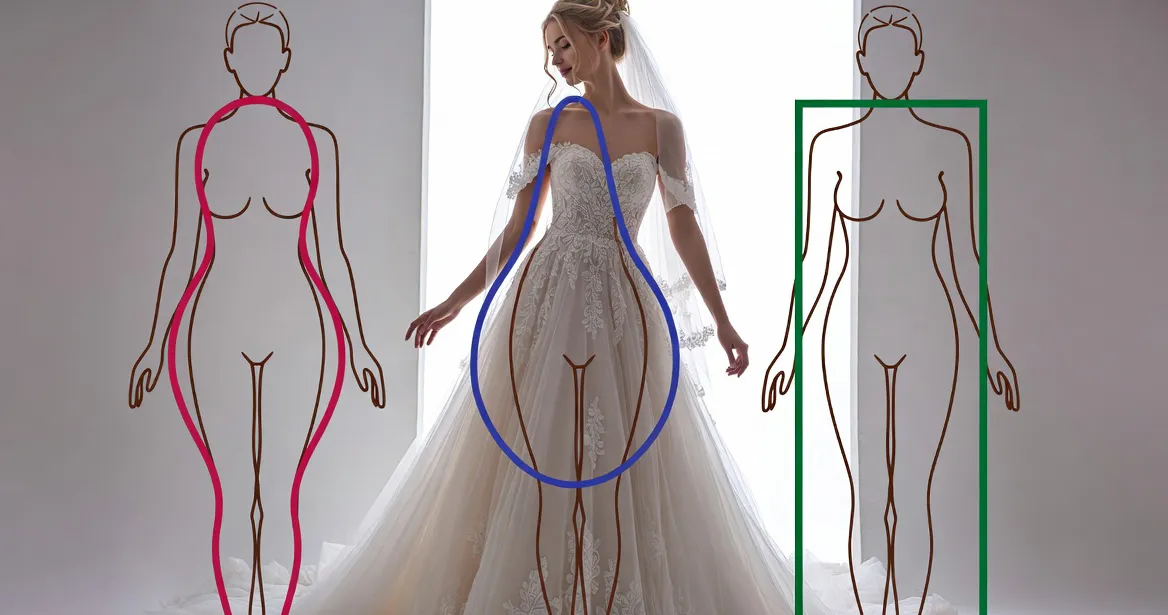
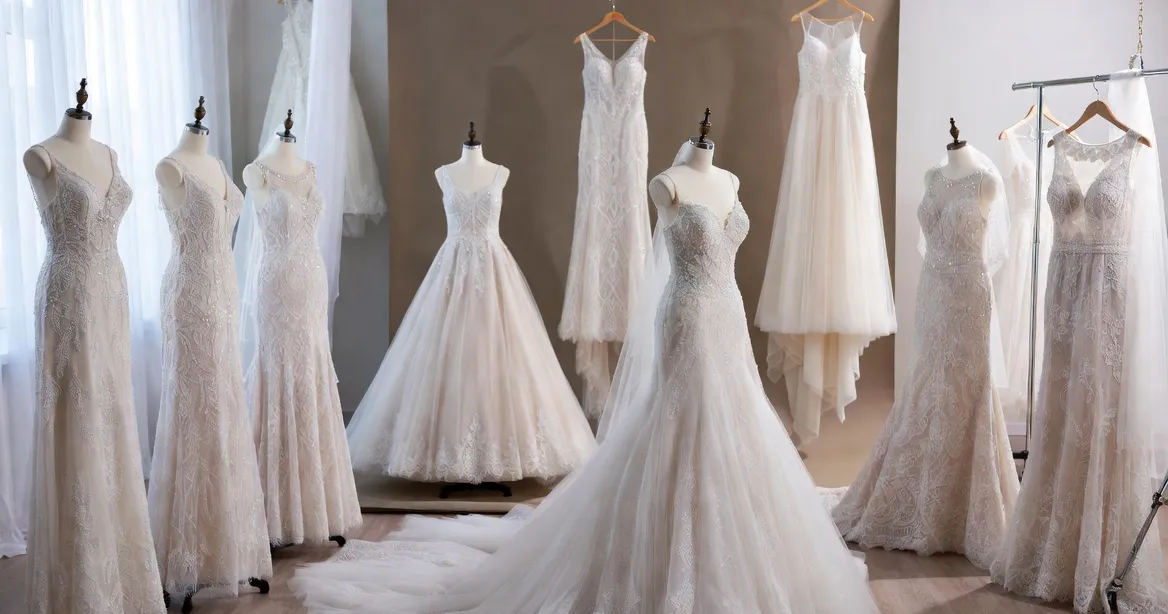
- A-line – Looks like the letter “A”; narrow at the top, wider at the bottom. Almost everyone looks good in it. Very popular.
- Ball Gown (Princess style) – Tiny waist + huge puffy skirt, like Cinderella or Disney princesses. Kate Middleton wore this style in 2011 when she married Prince William.
- Mermaid / Trumpet – Tight until the knees, then flares out. Shows off curves. Kim Kardashian wore a mermaid dress for her wedding.
- Sheath / Column – Straight and simple, follows the body line. Meghan Markle chose a very simple sheath dress in 2018 — very modern and elegant.
- Boho – Loose, flowy, often with lace and flowers. Perfect for beach or garden weddings.
Common Materials
- Satin – shiny and smooth
- Lace – romantic and delicate (Queen Victoria started the lace trend too!)
- Tulle – the net-like fabric that makes skirts puffy
- Silk – expensive and luxurious
- Beads, pearls, and crystals – for extra sparkle
Funny and Touching Stories
- Longest train ever: In 2018, a bride in Cyprus had a train 1.8 km long! It needed 20 people to carry it.
- Shortest famous dress: When singer Britney Spears got married in 2004, she wore a very short mini dress — totally broke tradition!
- Second-hand love: Many brides now buy “pre-loved” dresses on websites like Stillwhite or wear their mother’s dress after alteration. Actress Kate Moss wore her mother’s 1992 dress in 2023 — very sweet and eco-friendly.
Today’s Trends (2025)
- Color is coming back! Pale pink, light blue, even black dresses are popular.
- Sleeves are big again — long lace sleeves or puffy sleeves.
- “Two looks”: a ceremony dress + a party dress” so the bride can dance comfortably later.
- Sustainable dresses made from recycled materials.
In short, the Western wedding dress is more than just a piece of clothing — it is a symbol of love, a fashion statement, and often a family treasure that will be kept for daughters or granddaughters one day. Whether it costs $100 or $100,000, the moment a bride puts it on and walks toward her partner, it becomes priceless.
Civil Wedding
What is a civil wedding?
A civil wedding (also called civil ceremony or civil marriage) is a non-religious marriage performed by a government official, not by a priest, imam, rabbi, or any religious leader. It is 100% legal and official, but it has no church, temple, or religious rituals.
Who can do you marry with?
You marry in front of a government-authorized person, usually:
- A registrar (in a registry office)
- A mayor or deputy mayor
- A judge or justice of the peace
- Sometimes a notary (in some U.S. states or European countries)
Only this person + two witnesses are legally required. Everything else is optional!
Where does it happen?
Anywhere the law allows! Common places:
- Registry office / city hall (most classic and cheapest)
- Courthouse
- Approved venues: beach, park, hotel, castle, boat, hot-air balloon… (as long as the officiant can come)
A super simple real-life story (London, 2023)
Anna (British) and Luca (Italian) wanted to get married fast and cheap.
They booked a 15-minute slot at Islington Town Hall on a Tuesday morning.
They wore normal nice clothes (Anna in a white skirt, Luca in a shirt, no suit).
Their two best friends came as witnesses.
The registrar asked three questions:
“Do you take Luca to be your husband?” → “I do.”
“Do you take Anna to be your wife?” → “I do.”
“Are there any lawful reasons you cannot marry?” → “No.”
They signed the register, paid £150, and… done! Legally married.
That evening they had pizza and champagne with 30 friends. Total cost: under £500.
Another story – Las Vegas style (USA)
Sarah and Mike flew to Las Vegas on Friday night.
Saturday at 2 p.m. they went to the Marriage License Bureau, paid $102, got the license.
At 4 p.m. they walked into the “Little White Wedding Chapel.”
An officiant dressed as Elvis sang “Love Me Tender,” they said the legal words, they kissed, signed, and were married in 8 minutes.
Cost: about $300. They still call it “the best day ever.”
Yet another story – Beach in Denmark (popular for international couples)
Maria (Filipina) and Jonas (German) chose Denmark because it’s very fast for foreigners.
They arrived on Thursday, went to Copenhagen City Hall on Friday morning.
They had booked a 10-minute ceremony on the beach 30 minutes later (Denmark allows outdoor civil weddings).
The officiant came with a little table, they said “Ja” (yes) in Danish, exchanged rings, signed under the sun, and drank sparkling wine with seagulls flying around.
Total time in Denmark: 48 hours. Total cost: around €800 including hotel.
Key points in very simple words
- No religion → no prayers, no Bible/Koran readings, no blessings
- Very short: usually 5–20 minutes
- Very flexible: you choose place, clothes, guests, music
- 100% legally valid all over the world (as long as the country recognizes civil marriage)
- Can be tiny (just 4 people) or big (200 guests) – your choice
- You can add your own poems, songs, personal vows – just no religious parts if you want it to stay civil
In short: a civil wedding is the simplest, fastest, and often cheapest way to become husband and wife, with no religious rules and maximum freedom to make it your own. Many couples later add a blessing or party in a church if they want the religious part too!
Marriage Certificate (Western Style)
A marriage certificate is the official government-issued document that proves two people are legally married. In most Western countries (USA, UK, Canada, Australia, etc.), it is the only paper that truly shows “You are husband and wife (or wife and wife, husband and husband) in the eyes of the law.”
Think of it as the “marriage’s ID card.”
What does a typical Western marriage certificate look like?
It is usually an A4 or letter-sized fancy paper with:
- Full names of the two spouses (and sometimes their maiden names)
- Date of birth and place of birth
- Date and place of the marriage
- Names of the two witnesses
- Name and signature of the officiant (the person who performed the ceremony – priest, judge, celebrant, etc.)
- Official seal/stamp and registration number from the government
- Sometimes a pretty border or watermark so it looks important
Example from the United States (California):
STATE OF CALIFORNIA – DEPARTMENT OF PUBLIC HEALTH
CERTIFICATE OF MARRIAGE

Groom: James Michael Smith          Bride: Sophia Maria Garcia
Date of Birth: 15 May 1990          Date of Birth: 22 November 1992
Place of Marriage: San Francisco, California
Date of Marriage: June 12, 2024

Witnesses:
1. Emma Johnson          2. Carlos Garcia

Officiant: Rev. Sarah Williams

Registration No. 2024-567890     Issued: July 1, 2024
[Big golden seal of California]
A short story to show why it matters
Emma and Liam fell in love in London. They had a beautiful wedding in a garden with 80 guests, flowers everywhere, and everyone cried during the vows. The photographer took 2,000 pictures, and they posted them all on Instagram with #FinallyMrAndMrs.
Two weeks later they flew to Canada because Liam got a job in Toronto. At the Canadian immigration office, the officer asked:
“Proof of marriage, please.”
Emma showed the 50 beautiful wedding photos and the album.
The officer smiled and said: “Very nice party, but I need the marriage certificate.”
They didn’t have it yet (in the UK you have to wait a few weeks for the official one). So they had to fly back to London, pick up the real certificate from the register office, fly back to Canada, and only then could they start their new life together.
Lesson: 1000 wedding photos ≠ legal marriage. One piece of paper = legal marriage.
What can you do with a marriage certificate?
- Change your last name on passport, driver’s license, bank accounts
- File taxes as a married couple (often saves money!)
- Add your spouse to your health insurance
- Prove you are married when buying a house together
- Apply for spousal visa or immigration
- In sad cases, needed for inheritance or pension if one spouse dies
Fun fact
In Las Vegas, you can get married at 2 a.m. in a drive-through chapel by a man dressed as Elvis. Five minutes later you walk out with a real, government-recognized marriage certificate. It is 100% legally valid everywhere in the United States (and most countries).
So remember: the big white dress, the cake, the dance — all wonderful, but the only thing that actually turns “boyfriend/girlfriend” into “husband/wife” is that one simple (but very important) piece of paper called the marriage certificate!
Wedding Guest (Western Style)
A wedding guest in Western culture is someone invited to attend a wedding ceremony and reception. They are usually friends, family members, coworkers, or neighbors of the bride or groom. Being a good wedding guest is pretty simple: show up on time, celebrate the couple, and follow a few basic rules of etiquette.
1. The Invitation & RSVP
- You’ll get a fancy card (or email) telling you the date, time, place, and dress code.
- RSVP means “please reply” in French. You must tell the couple if you’re coming or not, usually within 2–3 weeks.
- Example: Sarah got an invitation to Mike and Lisa’s wedding. She immediately texted “Yes, I’ll be there with my husband!” That’s a good RSVP.
- Bad example: Tom received the invitation, threw it on the table, and forgot to reply. Two days before the wedding he asked “Hey, is your wedding this weekend?” The couple had already paid for his dinner that would go to waste.
2. What to Wear (Dress Code)
- White Tie (the most formal – think royal weddings or gala balls)
- Women: Floor-length evening gown, gloves, fancy jewelry
- Men: Black tailcoat, white bow tie, patent shoes
- Good example: What you see in James Bond movies or at a state dinner
- Bad example: Jeans and sneakers
- Black Tie / Formal (very common for evening or fancy weddings)
- Women: Floor-length gown or super elegant dress
- Men: Black tuxedo with black bow tie
- Good example: Emma wore a long navy silk gown
- Bad example: John showed up in a polo shirt and khakis
- Cocktail (the most popular for city or evening weddings)
- Women: Knee-length or midi cocktail dress
- Men: Dark suit and tie (bow tie optional)
- Good example: Sophie wore a red knee-length dress with heels
- Bad example: Flip-flops, shorts, or a tourist T-shirt
- Beach Formal / Resort Formal (destination or summer outdoor weddings)
- Women: Light, flowy long or short dress in pastel colors
- Men: Light linen or cotton suit, often no tie
- Good example: Light blue linen suit, white shirt, loafers (no socks is fine)
- Bad example: Heavy black wool suit in 35°C/95°F heat
- Semi-Formal / Dressy Casual (very common now)
- Women: Nice dress or stylish separates
- Men: Blazer + dress shirt (tie optional)
- Good example: Floral midi dress for her, navy blazer + grey pants for him
- Casual (only for backyard, farm, or super relaxed weddings)
- Women: Sundress or nice skirt/top
- Men: Clean chinos or dark jeans + collared shirt
- Good example: Khaki pants + button-down shirt + clean shoes
- Bad example: Sweatpants, gym shorts, dirty sneakers, or ripped clothes
3. Gifts
In Western weddings, guests usually give a gift (or money) to help the couple start their new life.
- Traditional: Something from the wedding registry (a list the couple makes at stores like Amazon, Target, or Crate & Barrel).
- Popular today: Cash or gift cards (especially in Italian, Greek, Chinese-American weddings – sometimes $200–500 per person).
- Story: At Anna’s wedding, every guest put a fancy envelope with money in a beautiful “card box” at the entrance. By the end of the night, the couple had enough for a honeymoon in Hawaii!
4. During the Ceremony
- Arrive 20–30 minutes early.
- Turn your phone to silent (or off!).
- Don’t take photos during the ceremony if there’s an official photographer – just enjoy the moment.
- Funny story: During the “you may kiss the bride” moment, Uncle Bob stood up on his chair to get a better Instagram photo and blocked everyone’s view. Everyone remembers Uncle Bob more than the kiss now…
5. At the Reception
- Eat, drink, dance, and have fun!
- Give a short toast only if you’re asked (don’t grab the microphone by yourself).
- The dance floor usually opens after the couple’s first dance.
- Example: When the DJ played “Sweet Caroline,” suddenly 200 guests were jumping and singing “Bum bum bum!” together – that’s the magic of a Western wedding party.
6. Plus-One and Kids
- If your invitation says “and Guest,” you can bring your partner.
- If it only has your name, it means you come alone.
- “Child-free wedding” is very common now – respect it and find a babysitter.
Quick Summary – How to Be an Awesome Wedding Guest
- Reply to the RSVP quickly.
- Dress according to the dress code (when in doubt, slightly overdress).
- Bring a gift or money.
- Arrive on time and stay off your phone during the ceremony.
- Celebrate like you mean it – the couple only gets one wedding day!
Being a great wedding guest is easy: just show love and respect for the couple on their big day. And yes, cake is usually served – save room for it! 🎂
Marriage After Divorce (Remarriage)
What is it?
Marriage after divorce, also called remarriage, means a person who was once married, got divorced, and then decides to marry again (either a new person or, in very rare cases, the same ex-spouse). It is extremely common in Western countries today.
How common is it?
In the United States, about 40–50% of all new marriages are remarriages for at least one of the partners. That means almost half of the weddings you see might include someone who was married before!
Simple examples and little stories
- Sarah and Mike (the most typical case)
Sarah got married at 24, had two kids, but after 10 years she and her husband grew apart and divorced when she was 35. Three years later she met Mike, a kind divorced dad with one daughter. They dated for two years, blended their three kids together, and got married when Sarah was 40. Now they are a happy “blended family” (also called a stepfamily). - Jennifer Lopez and Ben Affleck (“Bennifer” – famous example everyone knows)
J.Lo and actor Ben Affleck fell in love in 2002 and almost got married, but broke up. Both married other people: Jennifer married Marc Anthony (had twins, later divorced), Ben married Jennifer Garner (had three children, later divorced). In 2021, almost 20 years later, Ben and Jennifer started dating again and got married in 2022. This is called “rekindling” an old romance and then remarrying. - Tom and Rita (remarriage after being widowed + divorced)
Tom Cruise was married three times (divorced from Mimi Rogers, Nicole Kidman, and Katie Holmes). Many Hollywood stars have several marriages because their lives change quickly. - The “second-time-around” older couple
Mary got divorced at 52 after a 28-year marriage. She thought she would stay single forever. At 57 she joined a hiking club and met John, who had also been divorced for years. They married at 60 and say their second marriage is much happier because they now know what they really want.
**Things that are different in remarriage
- There are often children from previous marriages → step-parents and step-siblings.
- People usually have prenuptial agreements (“prenups”) to protect money and property they had before.
- The wedding is often smaller and simpler the second time (many couples choose a small ceremony or even elope).
- People tend to be more practical and less romantic, but often say the second marriage feels stronger because they learned from past mistakes.
A short real-life story to remember
Emma (38) always says:
“My first marriage at 23 was like a fairy tale… that turned into a nightmare. We fought about money and grew apart. After the divorce I spent years healing and raising my son alone. At 34 I met David on a dating app. He was also divorced with a little girl. We took everything slowly, went to counseling together before getting engaged, and got married last year. My 90% of our friends at the wedding were also on their second marriage! We joke that ‘second marriages are the triumph of hope over experience,’ but honestly, this time it feels calm, mature, and really good.”
In short: In Western culture today, divorce does not mean “game over” for love. Remarriage is completely normal, widely accepted, and very often more successful than the first one because people know themselves better the second time around.
Wedding March
The “Wedding March” most people think of today is the famous piece of music played when the bride walks down the aisle in Western weddings. There are actually two very famous “Wedding Marches” that everyone knows:
- The one you hear when the bride enters → “Here Comes the Bride”
- The one you hear when the couple leaves → the happy “da-da-da-dum” exit music
Both come from the 19th century and both became popular because of real royal weddings!
1. “Here Comes the Bride” (Bridal Chorus)
- Full name: Bridal Chorus from the opera Lohengrin
- Composer: Richard Wagner (German, 1813–1883)
- Year: 1850
Story behind it
In Wagner’s opera Lohengrin, there is a wedding scene in Act III. The bride (Elsa) is led to the church while a chorus sings “Treulich geführt” (“Faithfully guided”). The English words everyone sings today are much simpler:
“Here comes the bride, all dressed in white…”
How it became the world standard
On 25 January 1858, Princess Victoria (Queen Victoria’s oldest daughter, nicknamed “Vicky”) married Prince Friedrich of Prussia in London. She specifically chose Wagner’s Bridal Chorus to be played as she walked into the Chapel Royal at St James’s Palace. Because it was a huge royal wedding and newspapers wrote about every detail, ordinary people all over Europe and America started copying it. Within 20–30 years it became “the normal wedding song” in most English-speaking countries.
Fun fact: Some churches (especially very traditional ones) used to ban this music because it came from an opera, not from church!
2. The Recessional “Wedding March” (the exit music)
- Full name: Wedding March from the music for A Midsummer Night’s Dream
- Composer: Felix Mendelssohn (German, 1809–1847)
- Year: 1842
Story behind it
Mendelssohn wrote beautiful incidental music for Shakespeare’s comedy A Midsummer Night’s Dream. At the end of the play, when the three couples get married and dance away happily, Mendelssohn wrote the famous “da-da-da-dum, da-da-da-dum” march that everyone recognises today.
How it became the exit song
Again, the same royal wedding in 1858! After the ceremony, when Princess Victoria and Prince Friedrich walked out as a married couple, the organist played Mendelssohn’s Wedding March. Once more, newspapers told the world, and soon every wedding wanted the same “happy ending” music.
Quick comparison
| Moment | Music | Composer | Original source | Famous because of… |
|---|---|---|---|---|
| Bride walking in | “Here Comes the Bride” | Wagner | Opera Lohengrin (1850) | 1858 British royal wedding |
| Couple walking out | “da-da-da-dum” march | Mendelssohn | A Midsummer Night’s Dream (1842) | Same 1858 royal wedding |
Today
Almost every Western-style wedding you see in movies (or real life) in the USA, UK, Canada, Australia, etc. still uses one or both of these pieces. Even many non-religious (civil) ceremonies keep the tradition because it feels “classic” and everyone recognises it instantly.
So next time you hear “Here comes the bride…”, you now know it started with a German opera and became famous because a British princess liked it in 1858!
Mixed Marriage (Western Style)
What is a Western-style mixed marriage?
A mixed marriage (also called intermarriage or intercultural marriage) in the Western context usually means a marriage between two people from different races, ethnicities, religions, or cultural backgrounds. In Europe, North America, Australia etc., the most common types are:
- Different race (e.g. White + Asian, Black + White)
- Different religion (e.g. Christian + Muslim, Jewish + Catholic)
- Different nationality/culture (e.g. American + Chinese, French + Nigerian)
It is very normal today. In the United States, about 17% of new marriages (1 in 6) are mixed marriages (2022 data). In big cities like London, Paris, Toronto or New York, you see them everywhere.
Simple real-life stories
- Sarah and Kim (race + culture mix)
Sarah is a white American teacher from Texas. Kim is a Korean-American engineer whose parents came from Seoul. They met at university in California.
At their wedding they had two ceremonies:
• a classic Western white-dress church wedding
• a Korean paebaek ceremony where they bowed to parents and got money in white envelopes
Now they celebrate both Thanksgiving and Chuseok (Korean Thanksgiving). Their kids speak English at home but learn Korean on weekends. Food at home? Sometimes hamburgers, sometimes kimchi fried rice. - David and Amina (religion + culture mix)
David is British and was raised Christian (but not very religious). Amina grew up in a Moroccan Muslim family in France. They met while working in London.
They had a civil wedding at the city hall so it was neutral.
Later they also had: * a small nikah (Islamic marriage contract) for Amina’s family
• a blessing in a church garden for David’s family
They fast together during Ramadan and go to Christmas midnight mass with David’s parents. Their daughter has an Arabic middle name and celebrates both Eid and Christmas. - Carlos and Emily (nationality + language mix)
Carlos is from Mexico and speaks Spanish as his first language. Emily is a Canadian who only spoke English and French. They met while backpacking in Thailand.
Now they live in Vancouver. Carlos taught Emily Spanish; Emily taught Carlos better English. Their two sons are perfectly bilingual and think it’s normal to switch from English at school to Spanish at home. Every year they spend Christmas with Emily’s family in Canada (cold, snow, turkey) and Easter week in Mexico with Carlos’s family (warm, street parties, piñatas).
What is life really like?
The good parts:
- You learn two (or more) cultures → richer life
- Children usually speak two languages and feel “citizens of the world”
- Food is amazing! You never eat the same thing every day
The sometimes difficult parts:
- Family acceptance: some parents (especially older generation) need time to accept
- Holidays: you celebrate double the holidays → double the fun but also double the travel and cost
- Raising children: which religion? which language first? which school? Couples talk a lot and usually find a middle way
Today’s attitude in the West
In 1958, only 4% of Americans approved of black-white marriage. In 2021, 94% approved. Laws against mixed marriage were only removed in the USA in 1967! Today in almost all Western countries, nobody can stop you from marrying whoever you love.
So a Western-style mixed marriage is simply love that crosses borders — of color, faith, language, or passport. And more and more people are saying: “Love doesn’t care about borders.”
Leave a comment